-Safety Events Policies in Healthcare- In patient care we are taught not to euphemize. He hasn’t passed away; she isn’t lost; they haven’t departed. We use the word dead, because there can be no misunderstanding, and no false hope. For what must happen next to begin, the gravity of the information has to be clear. We don’t dress it up.
That clarity doesn’t necessarily cross the patient care/healthcare system membrane. We make up code names to describe critical threats to safety. We don’t even call them threats to safety on the backside- we call them “safety events”, or “incidents”. This can be for good reason; nobody being wheeled into surgery wants to hear overhead paging announce that there’s a holdup at the pharmacy. Alarming patients who aren’t at immediate risk is irresponsible. But do we forget to track back to naming it what it was when we later address the issue from a safety and accountability perspective?
Aviation, which has actually been a leader in Safety Culture, is also the inventor of the phrase “loss of separation with terrain” which, by the way, is not supposed to be funny. Incidentally, the person in pre-hospital medicine who first proposed the phrase “demand-resource narrowing” wasn’t serious, and was actually making a joke referencing that aviation term. (No one proposed the phrases “out of ambulances”, or “help is not coming”, by the way.) A circumlocution was born of a wisecrack.
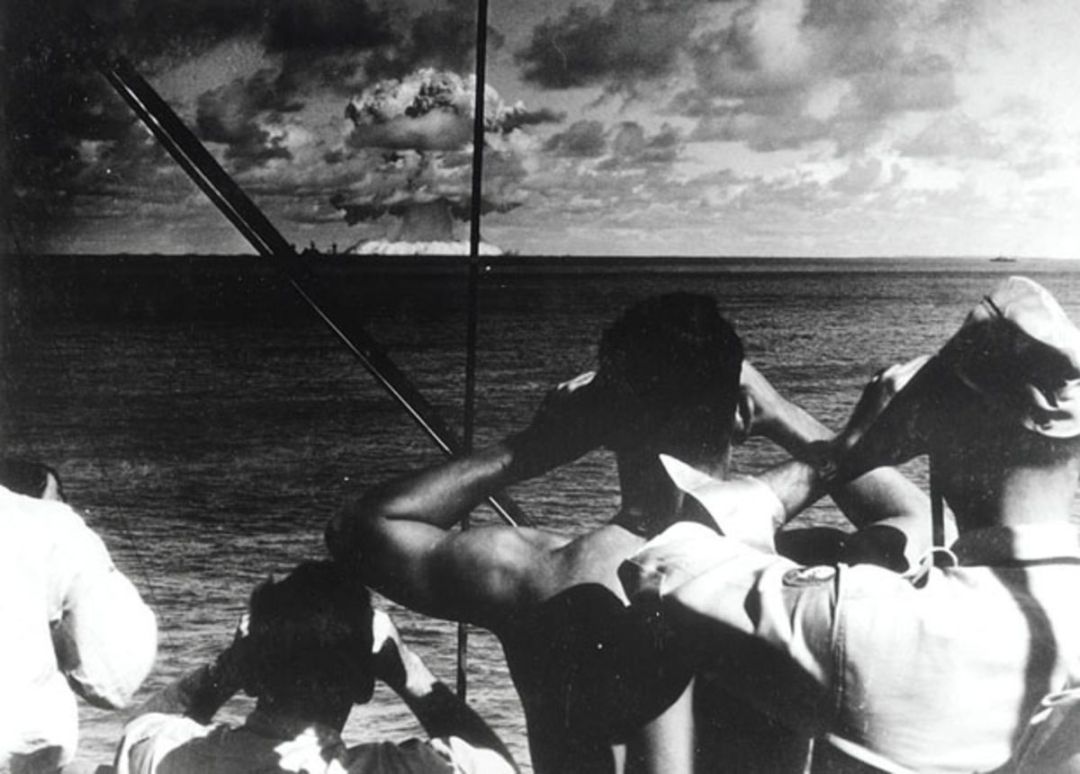
But listen, healthcare and aviation are rookies when it comes to euphemizing horrors. Check in with the American Military, whose diffusive flagwords sound fun and cool. You can make a hit movie about a chilling safety event without even changing the name; the military’s glossary of terror makes you secretly hope you get wrapped up in an international hazard just so you can talk about it with a cigar or a 100mm cigarette dangling out the corner of your mouth. Here are a few:
Broken Arrow: (Hollywood thought it was snappy too): Accidental event involving nuclear weapons, warheads, or components
Faded Giant: Event involving military nuclear reactor or other military non-weapon nuclear radiological accident
Dull Sword: Minor incident involving nuclear weapons that could impair their deployment
Empty Quiver: (my personal favourite): Theft, seizure, or loss of a functioning nuclear weapon “I left it right here!”
Nucflash: Possible detonation of a weapon that may result in the outbreak of nuclear war. Three such events were caused by miswiring or malfunction of warning and information systems, including one caused by a faulty $0.46 computer chip
Pinnacle: National Defense Major Commands code for “put your pants on, this is bad”.
Bent Spear: Incident involving nuclear weapons that isn’t a pinnacle, including breaches in handling and security
Who wants to announce a code zero, or a code red, or an enhanced proximity to defalcation, when you could grab that microphone and let the customers know your sword is dull and your spear is bent? If we’re not going to just say it, does it matter how we don’t say it? I’d argue it does, because we’re never going to be a Travolta movie or a dance hit if we carry on like this.
The term Safety Event masquerades as just another ambiguous euphemism. What is a “Safety Event”? In a culture of safety, a Safety Event policy is one of just three anchoring policies, so we know it’s important, but what is it? It sounds safe, doesn’t it? A Safety Event. Like a cocktail party for safety. Nothing to see here.
A Safety Event policy is a policy about how to handle anything at all in the operation that didn’t go as planned. Anything. Safety Events don’t need to have adverse outcomes to be safety events; they just need to be an unexpected, unplanned, or undesirable event in an area where we’ve assessed risk. That’s a Safety Event.
But wait… shouldn’t they be called Unsafety Events? Danger Events? Screw up Events? Are we just dressing up debacles, or using benign language to encourage people to report things they will be in trouble for?
Reasonably, that could be the case. A company that has a Safety Event policy without its fellow cornerstone policies could be doing just that. Without concurrent live policy defining the way human and system factors are addressed in the workplace, a Safety Event policy is flypaper- sticking indiscriminately, unforgiving, and soon just a harbinger to potential reporters.
What makes the Safety Events policy about safety is the mutual accountability of workers and employers… but mostly of employers, who have to go first for it to work. The employer’s commitment to fair and safety-focused event analysis has to be written right into the policies like a contract: the worker follows the policy, and so does the employer. Policy is a promise.
An abundance of the most crucial safety systems of our generation are built on the suffering and loss of life of others. Workplace cultures that are punitive and where system factors are ignored have shared blame in pushing the cost of safety so high. Safety Improvement can only follow thorough and truth-seeking inquiries, transparent communication, wide connections, and intelligent open-source design improvement. It finds and eliminates predictable hazards. Our workers and those we serve should never believe it’s just a matter of time before someone gets hurt. We have to acknowledge danger.
Leaders are accountable to create a legacy of improvement in their industry. Let’s start calling danger and safety by their right names. Bring a policy into force that deserves the title Safety Events, and earn the right to call your environment a Just or Safety Culture.
 Policy Alchemy