When US Airways First Officer Jeff Skiles appeared with physician, pilot, and healthcare safety expert Terry Fairbanks in a plenary presentation at the National Safety Foundation in 2012, Fairbanks joked that to demonstrate the way things can be different depending on the lens you look at them from, he had reframed his talk to discuss the ‘Miracle on the Hudson’ from the lens of goose safety.
While it was a good joke and icebreaker; there is actually a goose safety side of airline safety. Many current airplane components are not certified to withstand the impact force of even one large flocking bird, which means geese are legitimate hazards in air travel corridors. There are people whose entire careers will be about goose mitigation in aviation.
Although no one is specifically blaming the geese, I imagine that if geese were insured, there would be an apportionment of liability assigned. Because planes can’t just go around landing in rivers, so someone has to be at fault. What are we giving the birds? Fifty percent blame? Sixty? Could they see the Airbus… we might need a reenactment from the bird’s eye view.
Apportionment of blame, for obvious reasons, often accompanies financial settlements. But it’s a kind of thinking that occupies us all. Who do we blame when something goes wrong?
Faced with unwanted outcomes, in our quest for a culprit we rage against corporations, politicians, and individual citizens.
Things can’t JUST happen. Someone has to be guilty, because this can’t be a random place without reasons and order. It can’t be a place where young people JUST DIE and it’s not someone’s fault- and victims need to deserve what happens to them, or else it could happen to us, too. And we can’t go there.
Our historic desperation for order has brought some answers. Looking for reasons has brought us research, scientific innovation and space exploration. It is noble and beautiful.
It has also brought us the Salem Witch Trials, Internet trolls, and the Sally Clark conviction.
Moral Luck and the Outcome Bias
In a Just Culture, care is taken to identify bias that may impact decision-making. One such bias is called the Outcome Bias.
Texas A&M researcher Heather Lench, who specializes in emotion and cognition, presents the hypothetical situation where two men stand on a highway overpass, each with a different coloured brick, and throw the bricks into traffic below. One brick falls harmlessly, and the other strikes a car and kills the driver. Two men committed the same act, but the outcomes were not the same. In determining punishment, do we need to know which brick caused harm?
And that’s the Outcome Bias- a sentiment that negligent acts not resulting in bad outcomes should not be punished- “no harm, no foul”, and that those with negative outcomes should be judged more harshly.
Moral luck is when a person is subjected to moral judgments despite that the assessment is based on factors beyond their control, such as luck.
After toddler Lane Graves was dragged to his death by an alligator at a Disney resort, hundreds of online comments blamed the family.
Despite that the boy was just feet from his father who leaped into the water to struggle with the gator, and the extreme rarity of alligator attacks in Florida, the grieving parents were cruelly tormented by online commenters suggesting that they deserved to lose their child because they had allowed him to wade into the water in an area posted with ‘No Swimming’ signs.
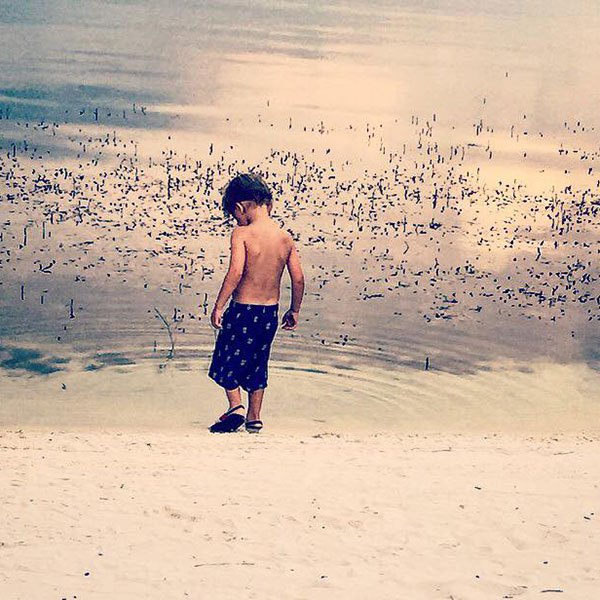
Fellow resort guest Jennifer Venditti-Roye, came to the family’s defense online, posting photos of her son, Channing, in the exact same spot where the attack happened, less than an hour earlier on the same day. “I can assure you that alligators were not on my mind at all when Channing was in the water. It’s a tiny beach surrounded by pools, waterslides, a restaurant, and a fire pit.” “It could have been [my son].”
The very thing no one wants to believe.
 Policy Alchemy