-Supporting Personnel after Adverse Events-
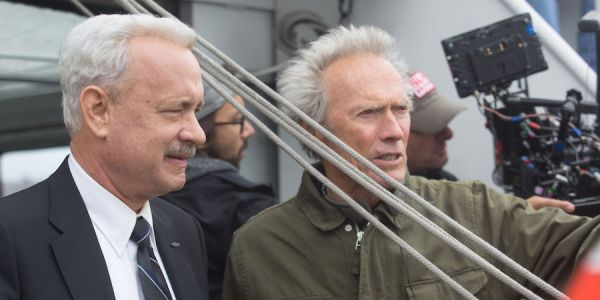
Google The National Transportation Safety Board, and in the top ten results you’ll find a Hollywood film review. NTSB members are reacting to ‘Sully’, the Clint Eastwood film starring Tom Hanks, which has been widely promoted as the true story of Chesley “Sully” Sullenberger, the US Airways Captain who landed an Airbus A320 on the Hudson River after a bird strike on January 15, 2009.
The NTSB asserts that its investigation was wrongly portrayed in the movie as adversarial, and unfair.
Charged by Congress to investigate transportation accidents, does the NTSB really have time for chirping about their portrayal in Hollywood? Should I expect to hear from Internal Affairs on their treatment in the last three decades of cop movies… and can we get someone from the Bureau of Ocean Energy Management into the spray tan booth please- I hear they’ve made a movie about Deepwater Horizon.
Is this what we do now? The NTSB, who meticulously document every activity and who publicly release all their findings now manage their professional reputations in OK! Magazine?
The NTSB might want to grab up one of Mariah Carey’s discarded managers; divas need proper representation. They will never have to be seen in fluorescent lighting without sunglasses again. It’s all about image, am I right? Don’t answer that, dahling.
The movie details the successful dead-sticking of flight 1549 onto the Hudson River with no fatalities. The actions of the crew were decisive, remarkable, and successful. Captain Sullenberger humbly credited his years of training. The flight crew worked in concert with other rescuers, and decades of professional preparation converged into a result that New York State Governor Paterson called ‘A Miracle on the Hudson’. This is what we love about the story, and why it makes a great movie. Sully stepped off that plane like he had Shawn Sachs in his breast pocket, and the lore of the Hudson landing became to high reliability industries as the butterfly allegory is to self-help and tattoos.
So what is the NTSB fussing about? Essentially, the movie depicts with reasonable accuracy the events of January 15, 2009. Apart from a few minor details, no one seems to be suggesting that the events of the crash were depicted inaccurately. The magniloquence is about the subsequent investigation.
Without knowing a single fact about how the investigation went down for real, I knew in the theatre that what I was seeing was incorrect. As the viewer, I accept that. Investigations are long, nuanced, and not nearly dramatic enough to hold an audience’s attention. As a movie-goer, I don’t want to see the whole investigation; I’m satisfied with a condensed version that sheds light on all the dramatic points and still gets me out the door before my shoes are completely stuck to the floor.
This is where the NTSB and the producers conflict. Exactly what kind of light did the movie shed on the investigation? And from what perspective was the light cast?
A statement by the NTSB: “The NTSB was not asked to contribute to or participate in the production of ‘Sully’ and as such we were not afforded an opportunity to ensure our actions and words were portrayed with accurate context or reflected our perspective.”
Retired NTSB specialist in human behaviour Malcolm Brenner asserted, “there was no effort to crucify or embarrass him” (Sully) and “if there were questions, it was to learn things.”
What things did they learn? Well, the full investigation is publicly available in its entirety, and predictably, is extensive and complex. Which is why hardly anyone will read it, compared with the millions who will watch the movie.
Captain Sullenberger said: “For those who are the focus of the investigation, the intensity of it is immense.” He referred to the process as “inherently adversarial, with professional reputations absolutely in the balance.”
Producer Stewart defends the movie’s version, saying: “Pilot and Co-pilot perceptions of the inquiry were just as valid as the version presented by the investigators.”
And with those words, Stewart has touched the crux. Two different versions of a story can both be true. Hollywood told one of the stories.
“Truth is like a diamond. Light comes in it and through it and from it from different directions. You need to move around to see it better.”-Thomas Froese
I can get on a plane piloted by someone I have never met, because of my faith in the safety systems associated with the airline industry. Like every consumer, I demand the level of accountability imposed by and upon the NTSB. Intense scrutiny of events is inevitable and necessary.
It also sucks.
I don’t want to hear from you about this unless you have been the person answering the questions. Unless you have been the one surging with adrenaline, who while still replaying events in your own mind, feel stripped of credit for a positive outcome, or blamed for a negative one.
And indeed, that’s the experience of an aftermath. This is what the salary is really for. Your personnel share accountability, endure scrutiny, and are the people for whom the event has not ended, when it has ended for everyone else. And it’s as necessary for them to know this as it is for them to never consider it.
In the 208 seconds between the bird strike and the water landing, Captain Sullenberger was present. He was not thinking about how bad this was going to be afterward. As an experienced pilot, he certainly knew, intellectually, that if he survived, there would be an investigation. I’m sure he also knew what that might feel like.
We don’t want pilots to be thinking of the NTSB in the seconds before an emergency landing. We don’t want police officers with their hand on a sidearm to be considering the SIU. We want medics to look at medical oversight as a resource, not a threat. We want our people making good and right choices based on training and experience that give them the confidence to react without fearing the aftermath.
High consequence personnel don’t only need confidence in their own actions; they need confidence that scrutiny is necessary, important, and truth seeking. Confidence that decisions will be evaluated based on the information that was available at the time, not what is known later. Confidence that the investigation process will be fair, and be motivated by the crucial intent to improve safety.
We need them ready to face that moment when it comes, and further confidence comes with the assurance that we will stand beside them in the hours or days of aftermath that will follow- we have nothing to lose by standing beside our personnel in those difficult hours. We aren’t obstructing an external investigation by supporting our staff; indeed it’s our very responsibility.
While it’s not possible to control the actions of external agencies, we don’t want distrust of those agencies to control the actions of our personnel.
Oversight that is opaque or untrusted harms us all, and increases the risk to those we serve. Reputation matters. Intention matters. The NTSB’s reaction to ‘Sully’ is a manifestation of their credibility.
In an email to Patrick Smith, NTSB investigator Benzon said: “This movie will hinder the success of future NTSB investigations. The NTSB needs the cooperation of all investigation participants: aircraft and engine manufacturers, airline operators, the FAA, employee unions, and very importantly flight crewmembers. The movie ‘Sully’ was a step backward.”
In a time when we are electing celebrities to public office, when Hollywood’s Creative Coalition employs a lobbying firm, when Bono is solving world hunger and your kids learned American history from watching National Treasure, we have to concede what the NTSB seems to know, and what Mariah Carey has been saying all along. When you are in the spotlight, it matters what you look like.
Mariah Carey’s complexion will not impact split-second decisions, but the lighting cast on the NTSB could.
In Policy
Establish a platform of trust:
- Clear policy about internal reviews, linked to information about how these will be consistently conducted in a timely way
- Distinctly separate processes for internal reviews, Hazard investigations, and Behavioural Assessment according to a Just Culture
When external actors investigate:
- A commitment to cooperate with authorized external investigations
- Access to tangible support and resources to assist those involved
Parallel reviews, where legal, demonstrate a commitment to fact- finding in the context of a Just Culture, and reduce the perception that external findings will be blindly accepted as the dominant truth
 Policy Alchemy